You clicked a small flag
Someone added a small pride flag to their website and linked it here. It is a signal: this is a space that means to be welcoming and safe for lesbian, gay, bisexual, transgender, queer, intersex, asexual, and other people across the LGBTQIA+ community.
The flag is just a picture — a quiet way of saying "you are welcome here." This page explains what the flags mean and where they come from, so the badge stands on its own even if you have never seen it before.
Why a site displays it
If you are a visitor: the badge is the site owner telling you they intend their space to be inclusive. It is a statement of welcome, not a guarantee or a certification — there is no authority behind it, and Hoist does not vet anyone. Take it as the friendly gesture it is.
If you run a site and want to add one: displaying the badge is a small public commitment. You are encouraged to point it at your own inclusion or safety statement rather than this page, so the link leads to something concrete you actually stand behind. The generator makes that the easy path.
The flags
Ten flags are included. Each entry below names the design and its origin and links to the artwork's source. Hoist is not an authority on flag history or canon — these are short summaries with sources you can follow to verify and read more.
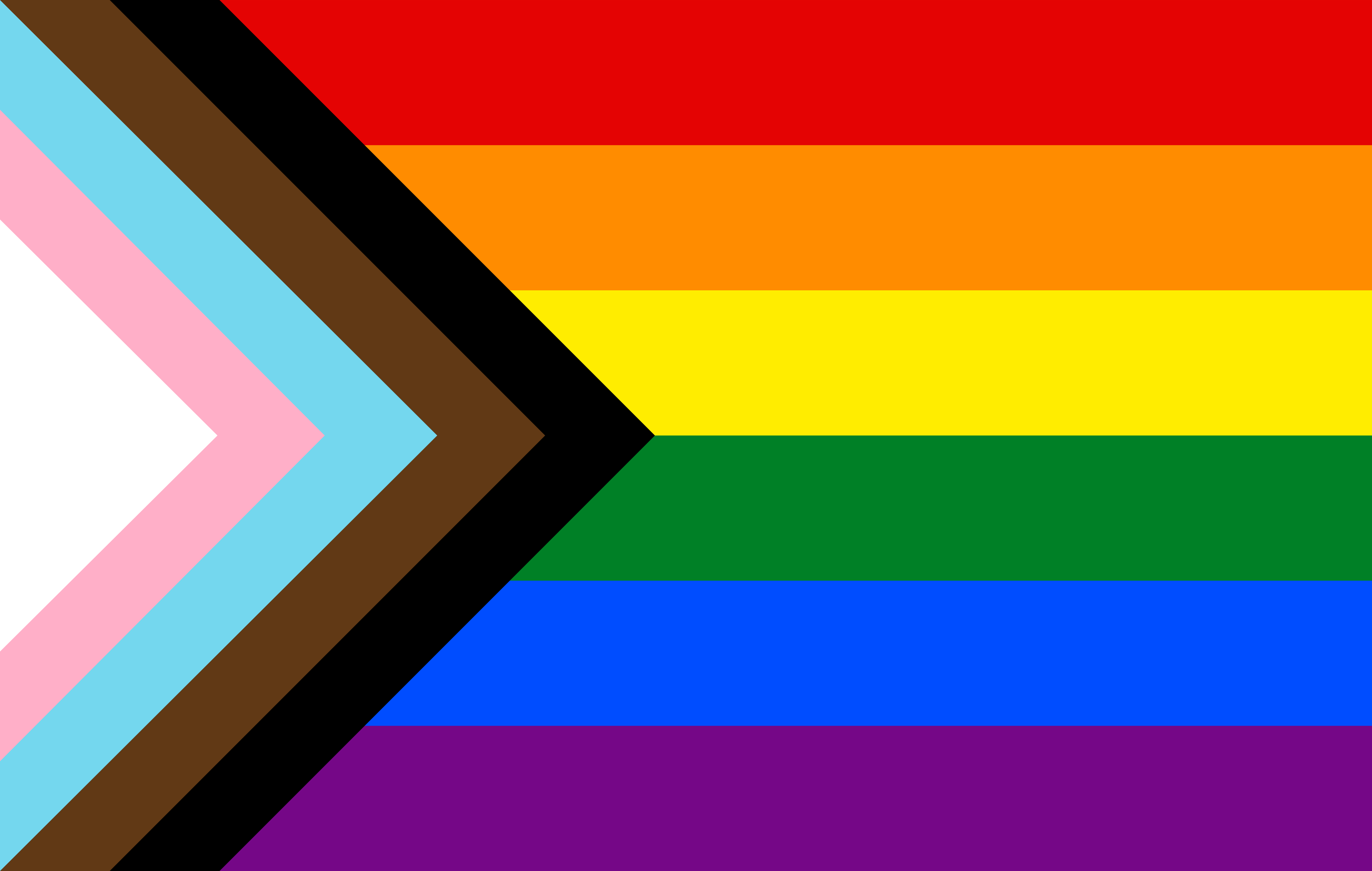
Progress Pride
Designed by Daniel Quasar in 2018, adding a forward-pointing chevron of black, brown, and the transgender flag's pink, blue, and white stripes to the six-stripe rainbow — foregrounding trans people and queer people of colour, and the idea that progress still needs making.
Source: Wikimedia Commons · file in the public domain; the design is distributed by Daniel Quasar under CC BY-NC-SA 4.0 — see artwork & licensing below.

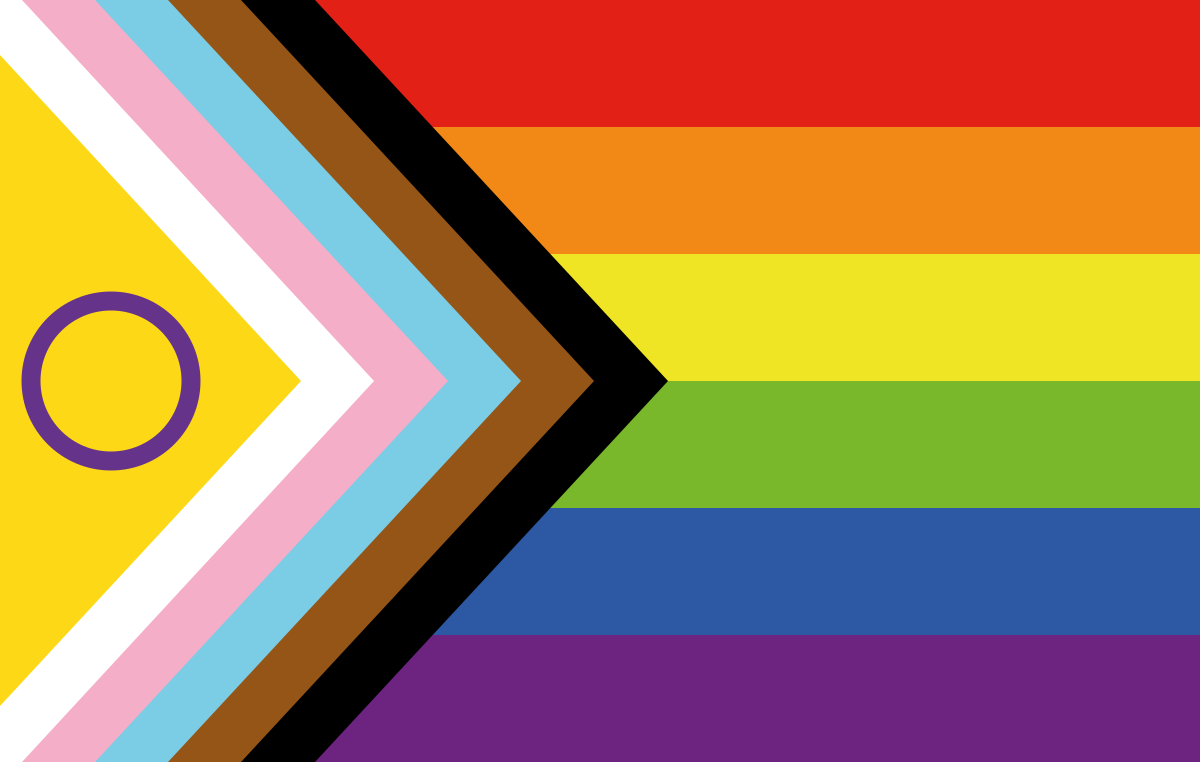
Intersex-inclusive Progress
Created by Valentino Vecchietti for Intersex Equality Rights UK in 2021, adding a purple circle on a yellow triangle — the intersex flag's symbol — to the Progress design, so intersex people are represented alongside everyone else.
Source: Wikimedia Commons · released CC0 (public domain dedication).

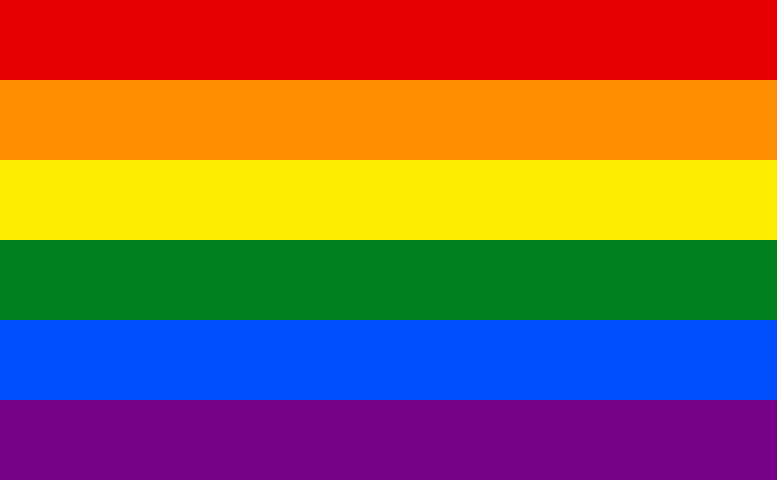
Rainbow (six-stripe)
The familiar six-stripe rainbow descends from Gilbert Baker's original 1978 flag, which had eight stripes. The pink and turquoise stripes were dropped over 1978–1979 for production reasons, leaving the six-colour version in wide use today.
Source: Wikimedia Commons · licensed "Copyrighted free use".

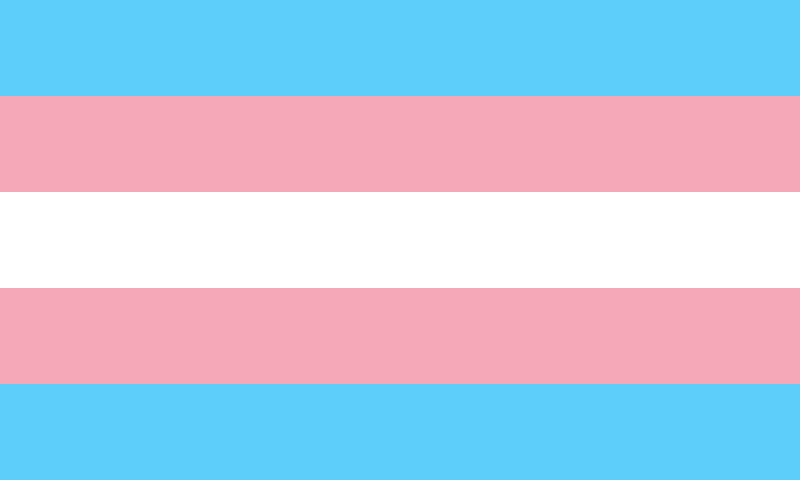
Transgender
Designed by Monica Helms in 1999. Light blue and pink for the traditional colours for boys and girls, with white in the centre for people who are transitioning, intersex, or of neutral or undefined gender — symmetrical so it is always "right side up."
Source: Wikimedia Commons · public domain.


Bisexual
Designed by Michael Page in 1998: a broad magenta band for attraction to the same gender, a blue band for attraction to other genders, and an overlapping purple band in the middle.
Source: Wikimedia Commons · public domain.


Pansexual
Three horizontal stripes — pink, yellow, and blue — that surfaced online around 2010 to represent attraction regardless of gender. Its exact authorship is not firmly documented; sources you can follow are below.
Source: Wikimedia Commons · public domain.

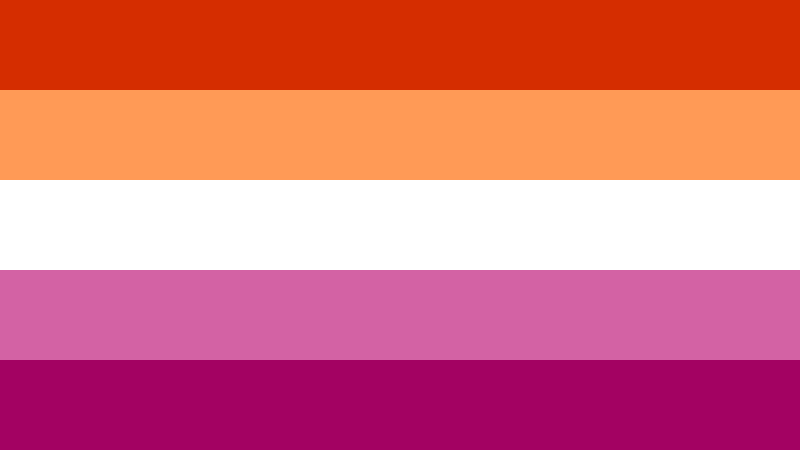
Lesbian (five-stripe)
This shades-of-orange-to-pink design is the simplified five-stripe version of a seven-stripe flag proposed by Emily Gwen in 2018. The five-stripe form is the one in common use.
Source: Wikimedia Commons · public domain.

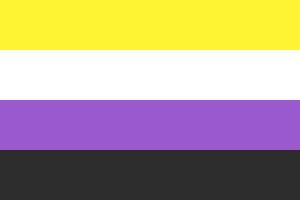
Non-binary
Created by Kye Rowan in 2014: yellow for genders outside the binary, white for many or all genders, purple for a mix of male and female, and black for people without gender.
Source: Wikimedia Commons · public domain.

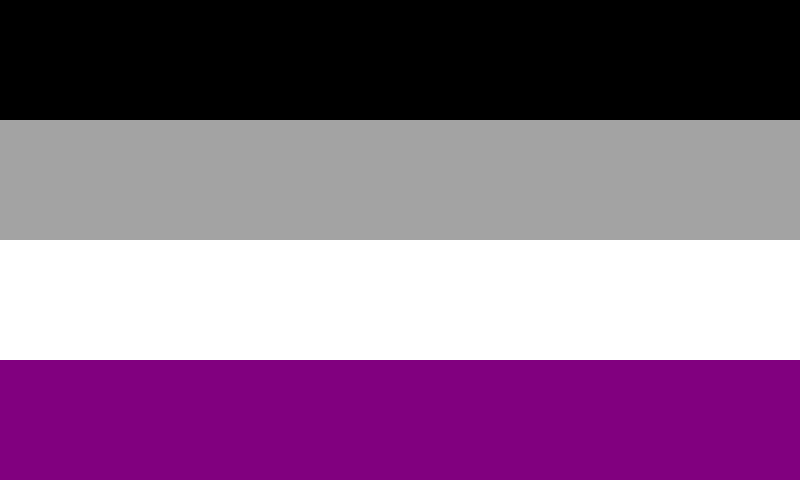
Asexual
Chosen by the asexual community through an AVEN (Asexual Visibility and Education Network) process in 2010: black, grey, white, and purple stripes for asexuality, the grey area, allies and the wider community, and community itself.
Source: Wikimedia Commons · public domain.

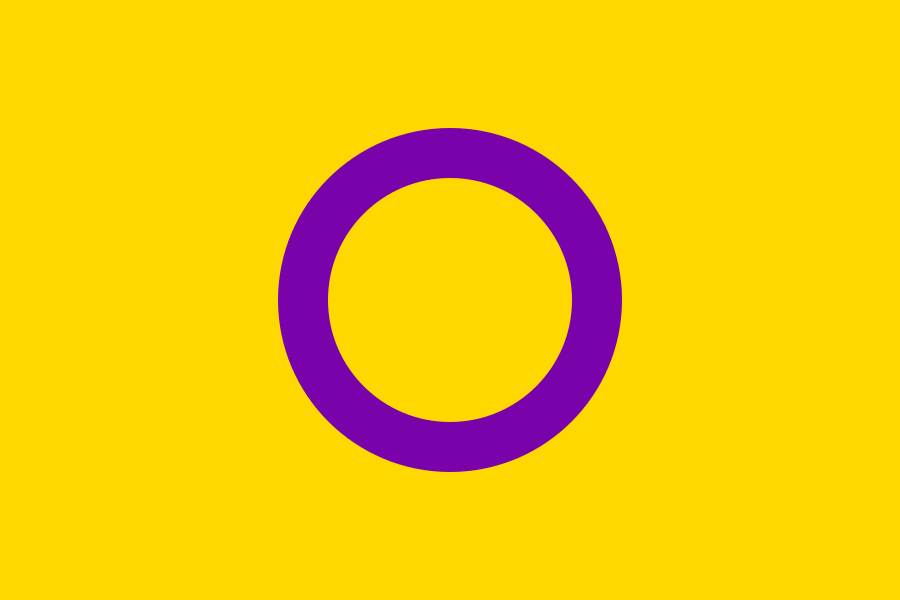
Intersex
Designed by Morgan Carpenter (Intersex Human Rights Australia) in 2013. A yellow field and a purple circle were deliberately chosen as colours and a symbol free of gendered associations; the unbroken circle stands for wholeness and bodily autonomy.
Source: Wikimedia Commons · public domain.

Don’t see the flag you’re looking for? Hoist is open source — request a flag (or contribute one) on GitHub.
Artwork & licensing
Hoist does not author flag artwork. Every flag is sourced from an existing project — primarily Wikimedia Commons — and vendored unchanged except for mechanical cleanup. We track the source and license for each file so you can verify them yourself.
| Flag | Designer / year | License (as stated by the source) |
|---|---|---|
| Progress Pride | Daniel Quasar, 2018 | File: public domain · design: CC BY-NC-SA 4.0 |
| Intersex-inclusive Progress | Valentino Vecchietti, 2021 | CC0 |
| Rainbow (six-stripe) | Gilbert Baker, 1978 | Copyrighted free use |
| Transgender | Monica Helms, 1999 | Public domain |
| Bisexual | Michael Page, 1998 | Public domain |
| Pansexual | circa 2010 | Public domain |
| Lesbian (five-stripe) | after Emily Gwen, 2018 | Public domain |
| Non-binary | Kye Rowan, 2014 | Public domain |
| Asexual | AVEN community, 2010 | Public domain |
| Intersex | Morgan Carpenter, 2013 | Public domain |
A note on the Progress flag
The Progress Pride flag deserves an honest word. The specific vector file Hoist ships is marked public domain on Wikimedia Commons because it is simple geometry. The design, however, is distributed by its creator Daniel Quasar under a Creative Commons Attribution-NonCommercial-ShareAlike 4.0 licence. The "non-commercial" term may matter depending on how and where you display it. Hoist is not in a position to give legal advice; please read Quasar's own terms at progress.gay and decide for yourself. If you would prefer a flag with no such restriction, the Intersex-inclusive Progress flag is released under CC0.
How the badge works
The badge is deliberately boring technology, and that is the point:
- No tracking. The embed is a static picture. It does not load scripts, set cookies, or phone home — not to Hoist, not to anyone.
- No external requests. The flag is drawn inline in the page's own markup. There is no CDN and no hosted image to go down or change under you.
- Frozen at copy time. What you paste is what you
keep. Nothing auto-updates, so there is no supply chain to compromise.
Each snippet carries a comment like
<!-- hoist v1 / progress -->so that if you view a page's source later, you can find and refresh older badges. - Accessible by construction. Screen readers announce the flag by name, followed by the site owner’s optional message; sighted visitors see that message as a hover tooltip. A linked badge also announces that it opens in a new tab. Linked or not, the badge always has a proper accessible name — you do not configure this.